
Diagnosed at 38, a Veteran, Living with ALK-Positive Lung Cancer: Laura's Story
July 6, 2026
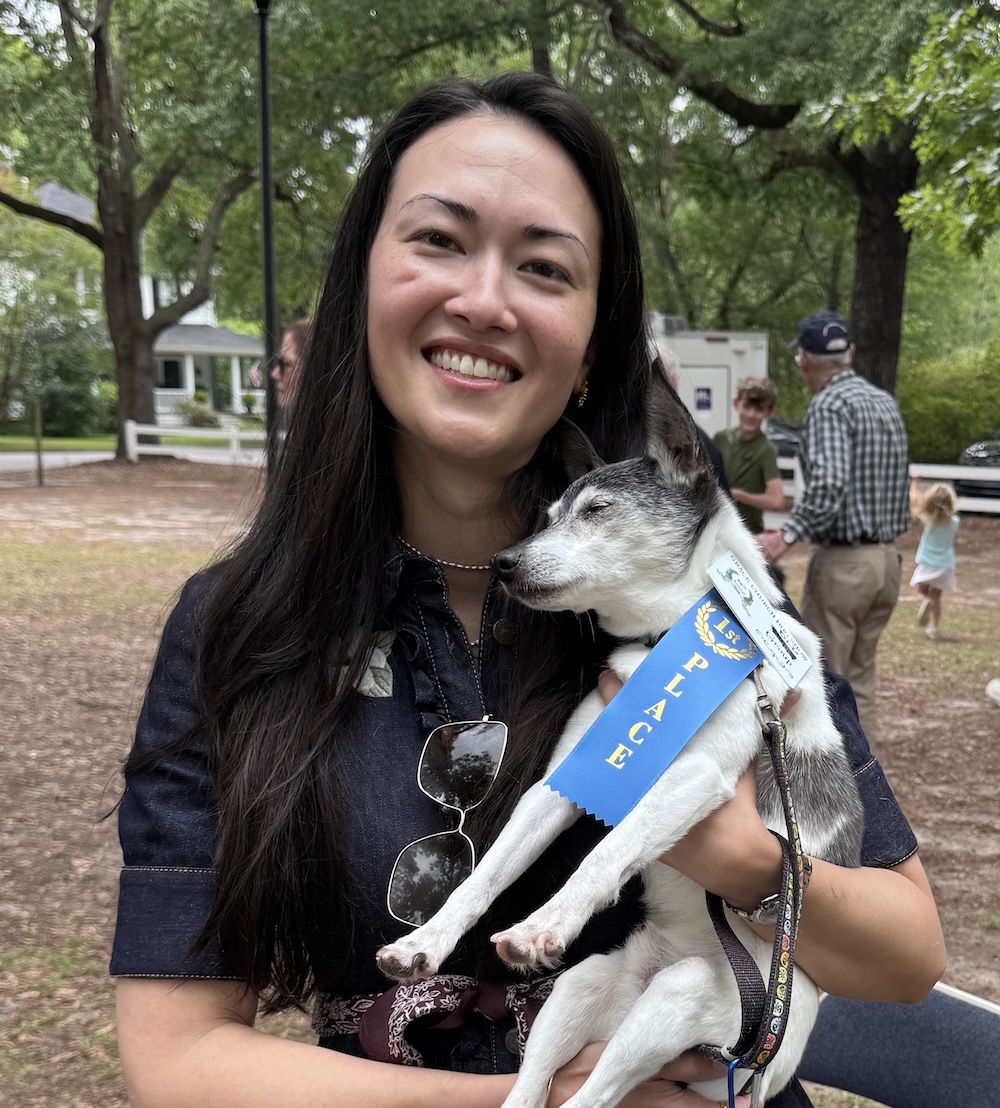
Laura lives in Camden, South Carolina, where she loves horseback riding, playing Mahjong, and is opening her very own Mahjong studio. She is a Veteran who receives care through the Veterans Administration (VA) and is an active advocate for lung cancer awareness.
Laura never expected lung cancer to be part of her story. At 38, she was doing everything she was supposed to do. She was keeping up with annual appointments through the VA, staying active, and paying attention to her health. Lung cancer wasn’t even on her radar.
But looking back, there were signs. She had a lingering cough that began the previous spring, fatigue that she chalked up to stress from work and life, and congestion that allergy medications never seemed to touch. Occasionally, she even coughed up blood. But like many people, especially younger people, she never imagined it could mean lung cancer.
“I was so focused on all the other cancers,” Laura said. “My mom died of colon cancer, so I started getting colonoscopies in my twenties. I kept up with everything they tell you to be aware of related to women’s health. But lung cancer was nowhere on my radar.”
During a routine visit at the VA in April 2023, Laura mentioned the cough to her doctor, along with wrist pain, exhaustion, and a handful of other symptoms that had slowly become part of everyday life. Because Veterans are diagnosed with lung cancer at higher rates than the general population, her care team ordered a chest X-ray right away.
The chest X-ray appeared to show a small 6-millimeter nodule in her right lung. It was small enough that her care team reassured her it was common in service members. They'd just monitor it with a CT scan to make sure it wasn't growing.
Then the CT results came back. The nodule wasn't 6 millimeters. It was almost 6 centimeters.
Her doctor called her that afternoon. She told Laura she was sorry and that she was going to schedule her with an oncologist right away. Laura didn't even know what to say.
"I'm sorry, ‘oncologist?’ What do you mean? Why do I need an oncologist? Could it be anything else?" she asked.
"Based on the size of [the nodule]," the doctor told her, "No. It's going to be cancer."
The importance of biomarker testing
A few days later, Laura underwent a biopsy through the VA’s partnership with the Medical University of South Carolina (MUSC). Her pulmonologist immediately emphasized the importance of comprehensive biomarker testing before starting treatment. It’s a step that Laura now knows was critical.
“They said, ‘We’re going to get a lot of tissue, send it for genetic testing, and wait for those results before deciding on treatment,’” she said. “I was lucky. This is how everybody should be treated.”
The results confirmed that Laura had stage 4 (IV) ALK-positive lung cancer, a form of non-small cell lung cancer (NSCLC) driven by an ALK biomarker. Although hearing the words “stage 4” was devastating, learning she had a biomarker also meant she had highly targeted treatment options available.
At first, Laura started treatment with alectinib, an ALK-targeted therapy. But while the medication effectively treated her cancer, the side effects became difficult to manage.
Eventually, after struggling with side effects and elevated liver enzymes, Laura transitioned to lorlatinib, another ALK-targeted therapy she says has allowed her to regain much of her quality of life.
“I have energy again,” she said. “It’s so much better.”
Learning to live with uncertainty

Still, adjusting to life with metastatic lung cancer has been about far more than finding the right medication. Laura describes the emotional aftermath of diagnosis as one of the hardest parts of her experience.
“The diagnosis is world-upending,” she said. “First, you think you’re going to die. Then, actually, no. Maybe you’re not going to die right away. And, OK, you’re excited to be doing so well, but now you have to figure out how to live this entirely new way.”
Over time, Laura has learned that coping doesn’t always mean fixing everything. In fact, some of her biggest lessons have come from letting go of the illusion of control.
“I went a little crazy trying to control everything at first,” she said. “I changed my diet, exercised constantly, and stopped drinking alcohol overnight. I just wanted to do something.”
“Over time, I had to learn to let go a little, and that I don’t need to solve every bad feeling,” she said. “I control what I can control and let the bad days come when they come. It doesn’t mean it’s forever.”
That shift in perspective has helped Laura rebuild a life that still feels joyful and meaningful. After her diagnosis, she moved to Camden, South Carolina, where she now spends time horseback riding, playing mahjong, and preparing to open a mahjong studio, a project she enthusiastically describes as her latest obsession.
“When I’m into something, I’m serious about it,” she laughed. “It’s been good to channel that energy from cancer to something more fun.”
Finding community and hope
Laura has also become involved in advocacy through GO2 for Lung Cancer and the ALK Positive community. Attending advocacy events and scientific summits has transformed the way she thinks about the future.
“Every year at the ALK Summit, researchers and doctors show us what they’re working on,” she said. “You realize there are absolutely brilliant people out there who care deeply about helping us live longer.”
Sharing her story on Capitol Hill during GO2’s Voices Summit has also shown her how much education is still needed around lung cancer.
“I realized legislators and staffers often don’t know anything about lung cancer,” she said. “Sharing my story was an opportunity to teach them about the disease and what is needed to better treat it.”
Today, Laura hopes her story helps challenge outdated assumptions about who gets lung cancer and what life after diagnosis can look like, especially for younger people, Veterans, and people living with biomarker-driven disease.
Her biggest advice for someone newly diagnosed?
“Take your time,” she said. “You don’t have to figure everything out right now.”
She also strongly encourages others to find community.
“The biggest help for me was joining a supportive group and talking to people going through the same thing,” Laura said. “You realize you’re not alone, and that’s priceless.”
“There’s so much more coming”
Three years after her diagnosis, Laura knows life still includes uncertainty, grief, and hard days. But it also includes hope, connection, and plans for the future.
“It’s so empowering to see all the advances happening in research,” she said, “I really believe there’s so much more coming.”
A lung cancer diagnosis can bring a lot of questions, emotions, and uncertainty. GO2 for Lung Cancer's free HelpLine connects you with trained specialists who can provide support, answer questions, and help you find resources along the way. Whether you're newly diagnosed, in treatment, or navigating survivorship, you don't have to face it alone.
Call us at 1-800-298-2436 or email support@go2.org to learn more.