
Lung cancer is a complex disease, and so is its treatment. In recent years, treatment for lung cancer has become much more personalized. The more information your healthcare team has about your specific diagnosis, the more they can develop a treatment plan specifically for you.


Overview of lung cancer treatment options
Lung cancer treatments fall into 2 broad categories: local and systemic.
Local therapies remove or destroy cancer in a select area of the body and include:
Systemic therapies aim to destroy cancer in the whole body and include:
Other lung cancer treatment options, such as combination therapies, clinical trials, and palliative care, can include local or systemic therapies.
Your healthcare team will discuss these options with you after detailed information is gathered from your biopsy and other medical tests. Examples of information used to determine your best treatment options include:
- The type and stage of lung cancer
- The presence of certain biomarkers
- How well your lungs are working
- Other health conditions that may increase the side effects of treatment
- Your ability to perform the activities of daily living by yourself, such as eating, bathing, and dressing
How treatments can be provided
If you’re receiving more than 1 type of cancer treatment, your healthcare team will also discuss the order you will receive your treatments.
- Neoadjuvant therapy is given before the main cancer treatment with the goal to reduce the size of the tumor and/or prevent spread.
- Adjuvant therapy is given after the main cancer treatment to reduce the chance of cancer returning.
- Combination therapy is 2 or more treatments given at the same time.
It’s important to play an active role in making decisions by talking to your healthcare team about your wants, needs, and goals for treatment. Combined with your test results, you and your team can determine the best treatment approach for you.
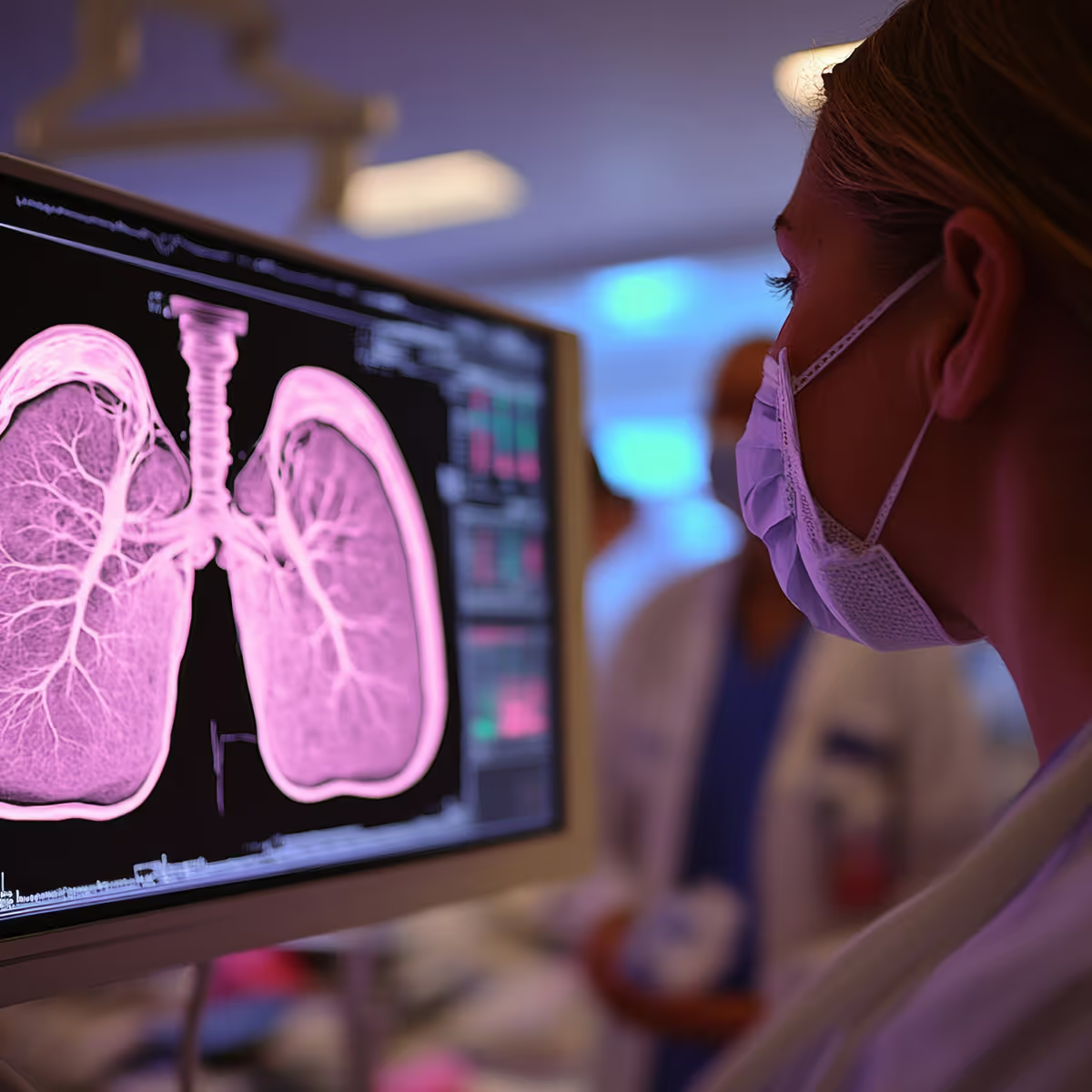
There are 2 main types of lung cancer: non-small cell lung cancer (NSCLC) and small cell lung cancer (SCLC). Some treatments can be used for either NSCLC or SCLC, while others cannot. Select your diagnosis below to see what treatments you may be eligible for.
One or more of the following therapies may be used to treat NSCLC. Treatment decisions are based on the stage of cancer, biomarker test results, and other personal health factors.
Surgery
Surgery aims to remove cancer while preserving as much healthy lung tissue as possible. It is often combined with other treatments like chemotherapy or radiation.
Radiation therapy
Radiation therapy, or radiotherapy, uses high-energy X-rays (photons), particle beams (protons), or other waves aimed at tumors. It is approved for use in any lung cancer with the goal of eliminating cancer in a specific area or lessening symptoms.
Chemotherapy
Chemotherapy drugs aim to stop the spread of fast-growing and dividing cells, like cancer cells. It is approved for use in all stages of lung cancer and is usually given through an IV (a small tube inserted in a vein) or a port (a permanent IV placed under the skin near the collarbone).
Targeted therapy
Targeted therapies are drugs designed to attack a specific target in a cancer cell. The target is a mutation (a change) in a cancer cell called a biomarker, which drives cancer cells to grow and spread.
Immunotherapy
Immunotherapy is a cancer treatment that helps the body’s immune system find and attack cancer cells. This extra help is important because cancer cells can appear like normal, healthy cells. Immunotherapy exposes cancer cells so your body’s immune system can fight them.
Clinical trials
A lung cancer clinical trial is a type of research that tests the safety and effectiveness of new methods to prevent, diagnose, treat, and monitor lung cancer. Clinical trials can also study how best to manage the emotional and physical effects of a lung cancer diagnosis.
One or more of the following therapies may be used to treat SCLC. Treatment decisions are based on the stage of cancer and other personal health factors.
Surgery
The goal of lung cancer surgery is to remove all of the cancerous tissue while sparing as much healthy lung tissue as possible. Surgery is rarely used in SCLC due to its fast growing nature.
Radiation therapy
Radiation therapy, or radiotherapy, uses high-energy X-rays (photons), particle beams (protons), or other waves aimed at tumors. It is approved for use in any lung cancer with the goal of eliminating cancer in a specific area or lessening symptoms.
Chemotherapy
Chemotherapy drugs aim to stop the spread of fast-growing and dividing cells, like cancer cells. It is approved for use in all stages of lung cancer and is usually given through an IV (a small tube inserted in a vein) or a port (a permanent IV placed under the skin near the collarbone).
Immunotherapy
Immunotherapy is a cancer treatment that helps the body’s immune system find and attack cancer cells. This extra help is important because cancer cells can appear like normal, healthy cells. Immunotherapy exposes cancer cells so your body’s immune system can fight them.
Clinical trials
A lung cancer clinical trial is a type of research that tests the safety and effectiveness of new methods to prevent, diagnose, treat, and monitor lung cancer. Clinical trials can also study how best to manage the emotional and physical effects of a lung cancer diagnosis.
Other types of care and therapies
Palliative care
Palliative care specialists are experts in preventing and easing symptoms and side effects of lung cancer. They work very closely with members of your healthcare team to improve your comfort and quality of life so you can enjoy more of what matters to you. Palliative care should be part of your lung cancer treatment plan as early as possible.
Complementary and alternative therapies
Complementary therapies or integrative medicine are practices used along with traditional cancer treatments. They can help with symptoms of cancer, ease treatment side effects, and relieve stress and anxiety.
Alternative therapies are those used instead of standard treatments. Because they have not been tested or researched in the same way, it’s not known if they are safe and effective. Some may even be harmful. Be careful of online claims of unproven cures that may be expensive and not helpful.
Advancements and breakthroughs in lung cancer treatment
Lung cancer treatment options are constantly changing, thanks to lifesaving research. Stay up to date by signing up to receive the latest news.

Resources and support for lung cancer patients
Being diagnosed with or caring for a loved one with lung cancer can feel very lonely and overwhelming at times, but there is help available for you.
GO2 for Lung Cancer can help you:
- Find information, support, and resources through our in-house HelpLine. Contact our caring HelpLine team at 1-800-298-2436, support@go2.org, or by filling out this online form.
- Understand biomarker testing and treatment options, or find a clinical trial through our LungMATCH program.
- Prepare for your next appointment with questions to ask your healthcare team.
- Connect with someone who has a similar diagnosis through our Phone Buddy program.
- Find qualified medical centers that focus on early detection of lung cancer, diagnosis, and treatment.
- Find credible, up-to-date information on every aspect of lung cancer.
We offer many more free programs to meet the needs of you and your loved ones.
Paying for cancer care
Most cancer centers have social workers or navigators who can explain what resources are available to help cover the cost of lung cancer treatment. They can help assess your needs and offer information on programs that you may qualify for.

Frequently asked questions
Where can I find more resources and support?
Contact the GO2 HelpLine at 1-800-298-2436 or email support@go2.org to connect with caring and highly trained staff who listen, answer your questions, and provide support. We offer many free programs and educational resources to meet your needs.
When should I get a second opinion on my lung cancer treatment options?
Before starting or changing treatment for lung cancer, you may want a second opinion. A second opinion simply means making an appointment with a different cancer specialist to hear what they believe is the best treatment for you. Seeking a second opinion before you begin treatment or when a change in treatment is needed is most useful. While it's important to start treatment in a timely manner, taking a short time to get a second opinion is usually okay
Where should I go for treatment?
It is important to find the type of cancer care that meets your needs. Where you receive your treatment is just as important as the team providing your care. To find highly qualified cancer centers, explore:
- GO2 for Lung Cancer Centers of Excellence
- National Cancer Institute (NCI) designated centers
Your primary care team is a good source for referrals to cancer specialists or centers as well as lung cancer support groups. If you need help finding a quality lung cancer treatment center near you, contact our HelpLine at 1-800-298-2436 or support@go2.org.
What are the different types of cancer centers?
Cancer treatment centers can be large or small, depending on the size of the communities they serve. Some hospitals have cancer centers and offer services within their network. Typically, large cities have higher numbers of cancer specialists and large treatment centers within hospitals. Cancer centers that partner with a medical school or other healthcare schools are sometimes known as teaching hospitals or academic medical centers. They are large centers that often have access to new treatments, advanced technology and ongoing research studies.
What are the different types of healthcare team members I may work with during lung cancer treatment?
Ideally, you’ll interact with a variety of lung cancer experts who will work together to develop the best treatment plan for you. This could include radiation oncologists, thoracic surgeons, interventional pulmonologists, pathologists, medical oncologists, and others. You may also work with specialized nurses and medical technicians.