
The Worst Club with the Best Members: Leslie's Story
August 5, 2026
Leslie lives in St. Augustine, FL with her husband, Ken, and their elderly rescue cat. Her children are grown and live in Maryland and Washington, DC. When not traveling, Leslie can be found soaking up the sunshine at the nearby beach.
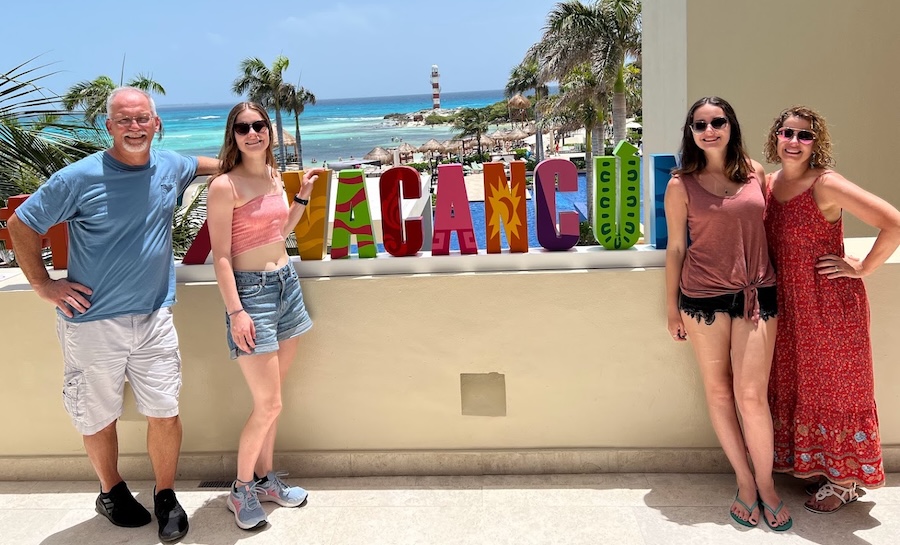
When Leslie's cough wouldn't go away, she did what most people would do; she went to her doctor. Then she went back again. And again.
She tried antibiotics and inhalers from her allergist, but nothing helped. Meanwhile, the cough worsened, her breathing became more difficult, and the active lifestyle she loved started slipping away. At the time, Leslie was teaching fitness classes, yet suddenly she found herself struggling to catch her breath.
As the weeks passed, Leslie became increasingly concerned. Her lymph nodes had become noticeably swollen, and she was getting sicker by the day. Although her primary care physician finally ordered a chest CT scan, the appointment was weeks away.
Friends urged her to stop waiting, and finally she listened. She drove herself to a nearby emergency room (ER), expecting to learn she had pneumonia or some other explanation for her symptoms. Instead, a CT scan performed at the hospital revealed a mass in her lung.
“Here’s why you can’t breathe”
The doctor in the ER returned to her room carrying a piece of paper.
"He said, 'I have good news. Your blood work is normal, and your COVID test is negative,’” Leslie remembered. “Then he handed me the scan results and said, 'Here's why you can't breathe.'"
Reading the report herself, Leslie saw the words "lung mass."
"I started screaming, 'Am I going to die?'"
Alone in the hospital room, she called her husband in a panic. Then, something remarkable happened. Her next-door neighbor, an oncologist, happened to be on call that day.
"She walked into my room, and it was like an angel at my bedside," Leslie said.
Her neighbor sat with her, held her hand, and said, “we’ll figure this out together.” Those words became an anchor during one of the most frightening moments of her life.
Finding hope in biomarker testing
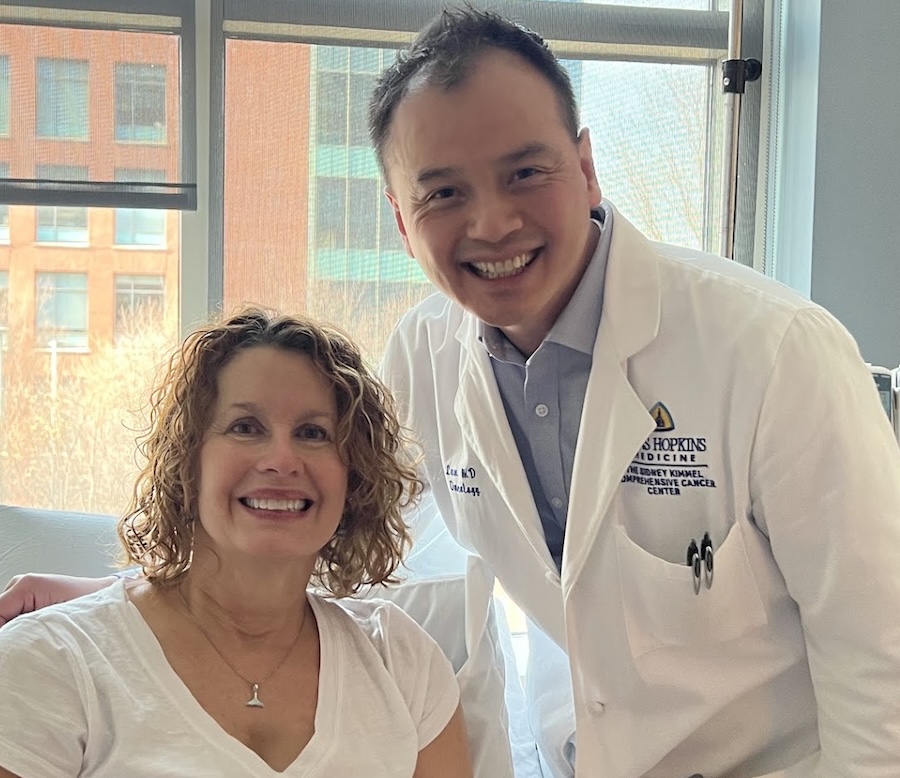
A biopsy soon confirmed that Leslie had lung cancer. Because the cancer had already spread to her lymph nodes, doctors knew it was advanced. Like many people diagnosed with stage 4 (IV) lung cancer, Leslie immediately feared the worst.
"All I could think was, 'I'm going to die. Am I going to see my daughters get married? Do I want to be buried or cremated? What’s going to happen to me?' My brain just spiraled."
Her neighbor, however, knew there was another important piece of information still to come: biomarker testing. The wait was agonizing. When a lab error delayed her results for nearly a month, she spent long days sitting outside in the sunshine, reading books, and trying to keep her mind occupied.
When the results finally came through, her neighbor actually printed them out and walked them over to Leslie’s house. She said, "This is good news!"
Leslie's cancer had tested positive for an ALK biomarker, and she heard a phrase that many people with ALK-positive lung cancer have heard before.
"You've won the cancer lottery."
At first, the statement felt impossible to understand.
"It didn't feel like I was winning any lottery," Leslie said.
But as her doctors explained what the ALK biomarker meant, Leslie began to understand. Advances in targeted therapies were allowing many people with ALK-positive lung cancer to live much longer and better than ever before. For the first time since her diagnosis, she felt a glimmer of hope.
The worst club you never wanted to join
Not long after her diagnosis, Leslie discovered the ALK Positive support community, a patient-founded and patient-driven nonprofit organization committed to transforming the future for everyone affected by ALK-positive cancer. No doctor had suggested it. She found it herself. The impact they had on her was profound.
"The ALK Positive group saved my life," she said.
At the time, Leslie was preparing to undergo radiation treatment for brain metastases. She already had the mask made and appointments scheduled. Then, members of the ALK Positive community encouraged her to pause and ask more questions.
"They said, 'Wait. Let the treatment work first.'"
After discussing options with her medical team, Leslie decided to hold off. It turned out to be a good decision. The targeted therapy worked. Her brain metastases responded without radiation.
For Leslie, it was an early lesson in the power of connecting with others who had walked the same path. She found people who had been living with ALK-positive lung cancer for as long as 10 years or more. She found friendships, practical advice, and reassurance that life could eventually feel normal again.
"You won't always be thinking about cancer," people told her. "It gets better."
They were right. Today, Leslie regularly attends ALK Positive events and has formed close friendships within the community.
"Lung cancer is the worst club you never wanted to join," she said, “but we have the best members.”
Learning to accept help
If there was another unexpected gift in the midst of Leslie's diagnosis, it was discovering just how deeply she was loved.
After Leslie’s diagnosis, her people started to show up for her in important and practical ways. Friends delivered meals. Cards arrived in the mail. Flowers showed up at her door. People researched treatment options, shared resources, and offered support in every way they could.
"The kindness was overwhelming," she said.
At first, Leslie found that accepting help felt uncomfortable. Over time, however, she realized that allowing people to help was a gift for them, too.
Looking back, Leslie describes the experience in a way she has never forgotten.
"It's almost like I died and I was at my own funeral," she said. "It was such a gift. I got to see how much people love me while I'm alive."
During the hardest period of her life, she experienced something beautiful.
"I felt like the luckiest person because who gets to experience that? Most people don't get to know how loved they are and how much they’ve meant to people."
Leslie’s friends across the world also helped her raise over $8,000 last year to donate to ALK Positive, which has contributed to the over $10.8 million in patient research funding since 2017. She is beyond grateful for their support of research.

Looking toward the future
Today, Leslie and her husband have retired and moved to Florida, a decision influenced in part by her diagnosis. Rather than waiting for someday, they're embracing the life they had always hoped to build. There are home projects to finish. Trips to plan. New adventures to take. She’s planning for the future in ways she never expected when she was first diagnosed.
Leslie is also participating in a clinical trial that is exploring new ways to prevent resistance to targeted therapies. The experience has deepened her appreciation for the researchers and physicians working to improve outcomes for people living with lung cancer.
"The research gives me so much hope," she said.
Less than 2 years ago, Leslie was wondering if she would live long enough to see her daughters' futures unfold. Today, she's busy planning her own.