
There’s a Horizon: Mike’s Story
October 22, 2026
Mike lives in Eldersburg, MD, with his wife, Belinda, and their teenage daughter. A longtime entrepreneur, he has spent more than 20 years in the vehicle graphics industry and currently operates businesses specializing in commercial fleet graphics and graphics removal. Mike is a U.S. Army veteran with a degree in anthropology and, in his spare time, enjoys traveling, playing guitar, scuba diving, spending time in nature, and, most importantly, spending time with his family and his Border Collie, Diamond.

Mike has plans. He wants to take his family to Utah and see the Rocky Mountains. He plans to watch his daughter graduate from high school. Someday, he hopes to meet his grandchildren.
None of those plans might sound remarkable, but to Mike they are. Three years ago, at age 49, he was diagnosed with small cell lung cancer (SCLC). And because of that, for a while he stopped imagining much of a future at all.
Today, however, he describes the difference simply: "There's a horizon now."
A pain that wouldn’t go away
In the summer of 2023, Mike was 49 years old. He was healthy and busy running his vehicle graphics business in Maryland when his shoulder started hurting. He had been wrapping a fleet of tractor trailers which often required intense physical work, so a sore shoulder didn’t seem particularly alarming.
His doctor initially prescribed steroids. When those didn’t help, they tried another medication. The pain persisted, so his doctor eventually ordered an X-ray.
The scan showed a cloudiness in Mike’s lung. He was referred to a pulmonologist, whose office initially told him the next available appointment was 7 months away. Mike, who had rarely needed medical care in his life, thought little of it.
An hour later, the office called back asking if he could he come in that afternoon.
“That place that had an appointment 7 months out wants to see me today,” Mike remembers telling his wife. “That can’t be good.”
The pulmonologist told Mike they suspected lung cancer. A CT scan revealed a roughly 10-centimeter Pancoast tumor, a tumor that occurs at the top of the lung, which can cause shoulder pain. A PET scan and biopsy followed.
A diagnosis of SCLC
At first, Mike’s doctors believed he had non-small cell lung cancer (NSCLC). The plan seemed relatively straightforward: surgery to remove part of his lung, followed by recovery.
Mike approached it with a plan, like he approached most things. He found a surgeon who performed minimally invasive robotic surgery and started running at the track every day so he would be in the best possible shape for the operation.
Then the biopsy came back. It revealed that Mike actually had small cell lung cancer (SCLC), rare in a Pancoast tumor.
“And then everything changed,” he said.
SCLC accounts for a smaller proportion of lung cancer diagnoses than NSCLC and behaves differently. For Mike, the most immediate difference was that surgery was no longer an option. Instead, he would undergo 4 rounds of chemotherapy and 33 radiation treatments.
The conversation about his future changed too. One doctor told him he had only ever known one woman with SCLC who lived 10 years and advised Mike to write a will.
“I said, ‘Dude, I’m 49 years old,’” Mike recalled. “You’re not giving me any hope here.”
Mike knew almost nothing about lung cancer at the time. In fact, before his diagnosis, he hadn’t realized how many kinds of cancer or treatments for cancer there were. Suddenly, he was trying to learn about a disease he had barely heard of while confronting statistics and conversations that made him wonder whether he had much of a future at all.
Mike became so convinced that his future might be short that he made an unusual plan for his first post-treatment PET scan. He had discovered something called a “tsunami pod,” a protective ball designed to withstand extreme forces. If his scan showed that the cancer was still there, Mike decided he was going to buy one, climb inside, and go over Niagara Falls.
“I hoped to survive the Falls,” he said. “But I also felt like, if I don’t, I don’t.”
He researched it. He posted about the plan on Facebook. He was serious. Fortunately, he never had to find out whether the tsunami pod would work.
“I didn’t have to do it,” he said.
His post-treatment scan brought good news: Mike’s treatment was successful.
Although the tumor itself remains visible on his scans, it is no longer active. Because it is entangled with nerves in his brachial plexus (the nerves near his shoulder and collarbone), the shoulder pain that first sent him to the doctor 3 years ago has also never completely disappeared.
Mike has found his own way of thinking about it.
“That pain reminds me that I beat cancer,” he said. “I’m glad to be alive to be able to feel it.”
“I felt so alone”
During treatment, Mike often felt like he was navigating cancer on his own. He had imagined that after a serious diagnosis like lung cancer, someone would take charge and tell him which doctor to see, make the appointments, and guide him from one step to the next. But this wasn’t Mike’s experience.
Instead, after learning he had SCLC, he remembers being told to find an oncologist.
“I didn’t even know what an oncologist was,” he said.
His father was beside him throughout treatment, taking him to every chemotherapy appointment and sitting with him during infusions. But navigating the healthcare system itself still felt like “a DIY project” to Mike.
Mike told his family that if he got through treatment, he wanted to do something to make the experience easier for the people who came after him. Eventually, he discovered that the organizations and communities he had needed were already out there.
GO2 for Lung Cancer’s survivor stories became an important source of hope. He also connected with a Phone Buddy who had lived many years beyond her own diagnosis.
“You guys were a major part of me not flipping my lid,” Mike said.
Seeing actual people living with lung cancer offered something statistics couldn't. Real hope.
Over time, Mike found a community of survivors, advocates, and others affected by lung cancer, people he describes as “the nicest people I wish I’d never met.”
“I wish I had never had any connection with this at all,” he said. “But because of my diagnosis I’ve had the occasion to meet some of the best people I’ve ever met in my life.”
The fear of SCLC
Today, Mike helps provide that same reassurance to others. As someone who barely used social media before cancer and even had a flip phone at the time he was diagnosed, Mike is now a moderator of a large lung cancer Facebook group and a member of two SCLC groups (the Small Cell SMASHERS and the Small Cell Lung Cancer Support Community) where he helps others who have received a SCLC diagnosis find accurate information and support.
He has noticed a particular fear among people newly diagnosed with SCLC.
“They tend to be convinced that it’s absolutely going to come back,” he said.
People don’t necessarily ask if their cancer will recur, Mike says, they focus on when. They ask others how long it took before their cancer recurred. Someone who has been cancer-free for 8 months might ask when they should expect the cancer to return or whether they’ll make it to the following year.
Mike understands that fear because he lived it. But now, 3 years after his own diagnosis, he knows that sharing his own experience can help show them that recurrence isn’t inevitable.
Fighting misinformation and stigma
Mike has also become passionate about helping people find reliable information. Before his diagnosis, he readily believed claims about alternative cancer treatments. Immediately after learning he had lung cancer, he began looking into some of them himself.
Once he started researching, he realized how unreliable online information can be.
Today, Mike often finds himself warning newly diagnosed people about misinformation, unproven treatments, and scammers who prey on people when they are frightened and vulnerable. He is committed to helping people make informed decisions about their care despite the flood of health misinformation online.
He is equally outspoken about stigma, another problem people with lung cancer know well.
When Mike was receiving radiation, another patient asked what kind of cancer he had.
“Lung cancer,” Mike answered.
“Oh, well, did you smoke?”
Mike responded by asking the man, who had colon cancer, whether he had eaten a bad diet. The man was offended.
“You did exactly the same thing to me,” Mike told him. “I was only kidding with you, but you didn’t even consider whether your question might be rude to ask me.”
Mike knows there are risk factors for lung cancer, just as there are for many diseases. But he also knows that none of them determine who deserves compassion.
“Anybody with lungs can get lung cancer,” he said, “and everyone deserves kindness and good care.”
There’s a horizon
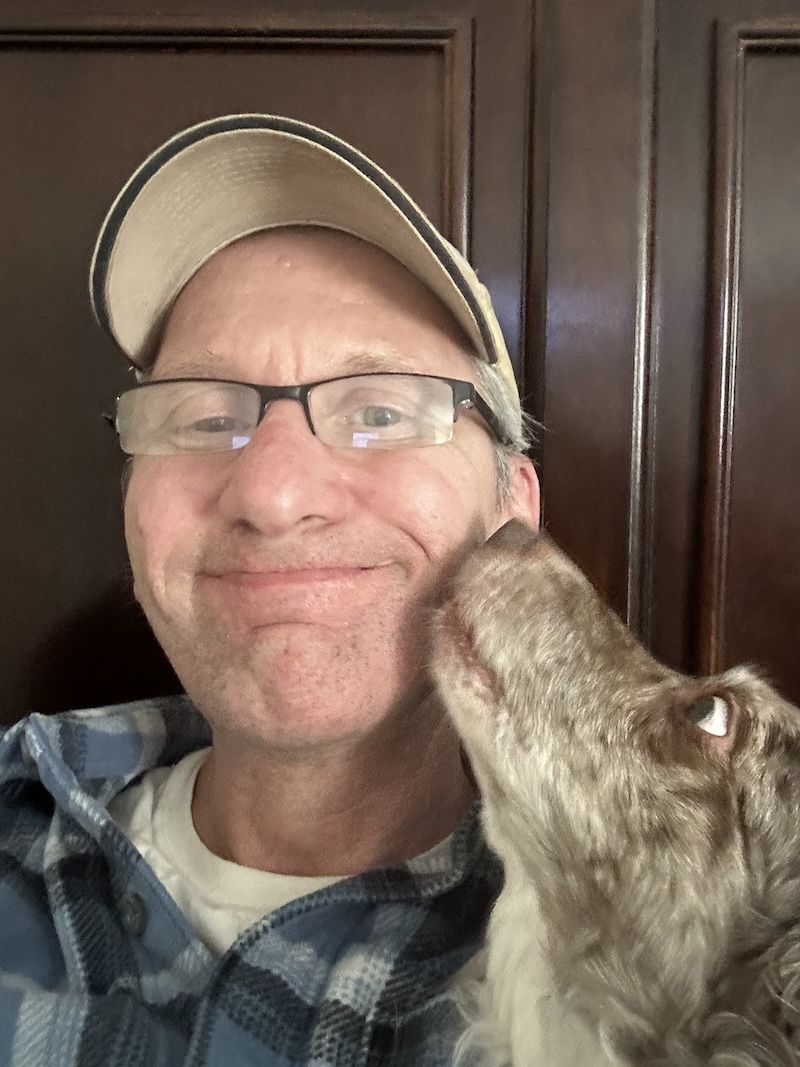
Perhaps the biggest change over the past 3 years has been allowing himself to imagine a future again. For a while, Mike and his family stopped planning things. There didn't seem to be a point.
But now, there is. He thinks about traveling. He enjoys cooking dinner with his daughter and spending time with his family. He thinks about watching her grow up.
And he looks at advances in SCLC research and treatment with hope. The treatment landscape has already changed since his own diagnosis, he notes, and there are options available today that weren't part of his treatment just 3 years ago.
That matters when he talks to someone newly diagnosed who has searched online and found frightening survival statistics.
“Everything you see is at least 5 years old,” Mike tells them. “These statistics don’t include people being treated right now.”
He knows firsthand how frightening SCLC can be. He doesn't minimize it, and he doesn't believe people need to maintain a relentlessly positive attitude to survive it. Mike himself was angry throughout much of treatment. But 3 years later, he feels differently.
“There's a horizon,” he said.
And after spending a period of his life believing there wasn't one, Mike is enjoying the opportunity to see what's beyond it.
GO2 understands the unique needs of people living with SCLC. Explore our list of SCLC resources and support groups.